Podcast: Misconceptions

Misconceptions
By Reveal | The Center for Investigative Reporting and PRX | Sept. 15, 2018

Originally broadcast in June 2017, around the 40th anniversary of in vitro fertilization, this podcast follows a couple that “puts its trust in a fertility clinic that promises more than it can deliver.” It explores the world of fertility treatment and the clinics and intended parents it brings together with promises of forming families.

Listen to the full podcast >

Article: 44 Siblings and Counting

44 Siblings and Counting
By Ariana Eunjung Cha | The Washington Post | Sept. 12, 2018

The midsummer reunion in a suburb west of the city looks like any other, but these family ties can’t be described with standard labels. Instead, Arroyo, a 21-year-old waitress from Orlando, is here to meet “DNA-in-laws,” various “sister-moms” and especially people like Sophia, a cherished “donor-sibling.”

This article follows Kianni Arroyo, one of many children created using sperm from “donor #2757,” in her quest to find her donor-siblings. It tracks country-specific caps on donor births, as well as efforts of organizations like Donor Sibling Registry that urge the U.S. Food and Drug Administration to limit the number of births per donor, mandate reporting of donor-conceived births, and require donors to provide post-conception medical updates.

Read the full article >

Book: Beyond Bioethics: Toward a New Biopolitics

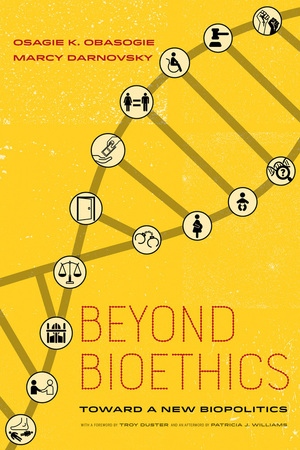
Beyond Bioethics: Toward a New Biopolitics
Edited By: Osagie K. Obasogie and Marcy Darnovsky | University of California Press | March 2018

Beyond Bioethics by Osagie K. Obasogie, Marcy DarnovskyFrom the publisher’s website:

For decades, the field of bioethics has shaped the way we think about ethical problems in science, technology, and medicine. But its traditional emphasis on individual interests such as doctor-patient relationships, informed consent, and personal autonomy is minimally helpful in confronting the social and political challenges posed by new human biotechnologies such as assisted reproduction, human genetic modification, and DNA forensics. Beyond Bioethics addresses these provocative issues from an emerging standpoint that is attentive to race, gender, class, disability, privacy, and notions of democracy—a “new biopolitics.”

This authoritative volume provides an overview for those grappling with the profound dilemmas posed by these developments. It brings together the work of cutting-edge thinkers from diverse fields of study and public engagement, all of them committed to this new perspective grounded in social justice and public interest values.

Report: Assisted Reproductive Technology Surveillance — United States, 2015

Assisted Reproductive Technology Surveillance — United States, 2015
By Centers for Disease Control and Prevention | Morbidity and Mortality Weekly Report | Feb. 16, 2018

From the introduction:

Since the first U.S. infant conceived with assisted reproductive technology (ART) was born in 1981, both the use of ART and the number of fertility clinics providing ART services have increased steadily in the United States. ART includes fertility treatments in which eggs or embryos are handled in the laboratory (i.e., in vitro fertilization [IVF] and related procedures). Although the majority of infants conceived through ART are singletons, women who undergo ART procedures are more likely than women who conceive naturally to deliver multiple-birth infants. Multiple births pose substantial risks for both mothers and infants, including obstetric complications, preterm delivery (<37 weeks), and low birthweight (<2,500 g) infants. This report provides state-specific information for the United States (including the District of Columbia and Puerto Rico) on ART procedures performed in 2015 and compares birth outcomes that occurred in 2015 (resulting from ART procedures performed in 2014 and 2015) with outcomes for all infants born in the United States in 2015.

Read the full report >

Report: Multiple Pregnancies Following Assisted Conception

Multiple Pregnancies Following Assisted Conception
By T. El-Toukhy, S. Bhattacharya and V. A. Akande | Royal College of Obstetricians and Gynaecologists | February 2018

First published in 2011, under the same title, this report raises an alarm about the risks of multiple pregnancies in assisted reproduction, resulting from the common practice of transferring multiple embryos. Maternal complications, according to the report, include increased risk of pregnancy-induced hypertension, gestational diabetes, peripartum haemorrhage, operative delivery, postpartum depression, and heightened symptoms of anxiety and parenting stress. Multiple pregnancy is also associated with a six-fold increase in the risk of preterm birth, which is a leading cause of infant mortality and long-term mental and physical disabilities, including cerebral palsy, learning difficulties and chronic lung disease.

Read the full report >

Read a summary, along with RCOG’s recommendation that IVF be fully funded by the National Health Service, as a step towards reducing multiple pregnancies and related risks.


Book: Gender Before Birth: Sex Selection in a Transnational Context

Gender Before Birth: Sex Selection in a Transnational Context
By Rajani Bhatia | University of Washington Press | 2018
Buy at Amazon >

From the publisher’s website:

In the mid-1990s, the international community pronounced prenatal sex selection via abortion an “act of violence against women” and “unethical.” At the same time, new developments in reproductive technology in the United States led to a method of sex selection before conception; its US inventor marketed the practice as “family balancing” and defended it with the rhetoric of freedom of choice. In Gender before Birth, Rajani Bhatia takes on the double standard of how similar practices in the West and non-West are divergently named and framed.

Bhatia’s extensive fieldwork includes interviews with clinicians, scientists, biomedical service providers, and feminist activists, and her resulting analysis extends both feminist theory on reproduction and feminist science and technology studies. She argues that we are at the beginning of a changing transnational terrain that presents new challenges to theorized inequality in reproduction, demonstrating how the technosciences often get embroiled in colonial gender and racial politics.


Report: Toward a Strengthened Assisted Human Reproduction Act

Toward a Strengthened Assisted Human Reproduction Act
By Health Canada | July 11, 2017

This report tracks steps taken by the Government of Canada towards strengthening the country’s Assisted Human Reproduction Act and supporting regulation. It focuses on three specific areas: the safety of donor sperm and eggs; the process, scope, and documentation related to reimbursement; administration and enforcement.

The purpose of the document, according to its introduction, is to provide Canadians with an overview of key policy proposals that will help inform the development of regulations and engage citizens prior to finalizing policy. Several members of Impact Ethics participated in a public consultation (read the summary), including Françoise Baylis, co-editor of “Family Making: Contemporary Ethical Challenges.”

Read the full report >

Read a commentary on Health Canada’s efforts to reboot the Assisted Human Reproduction Act, contributed to the International Journal of Feminist Approaches to Bioethics by Francine Coeytaux (Co-Director of Pro-Choice Alliance for Responsible Research), Marcy Darnovsky (Executive Director of Center for Genetics and Society), Susan Berke Fogel (Co-Director of Pro-Choice Alliance for Responsible Research), and Emily Galpern (Consultant at Center for Genetics and Society).

Podcast: Is Egg Donation Safe?

Is Egg Donation Safe?
By Reveal | The Center for Investigative Reporting | June 1, 2017


Podcast: Ethics and Emerging Technologies

Ethics and Emerging Technologies
By Mark Sackler | Seeking Delphi | March 30, 2017

Listen to James J. Hughes, director of The Institute for Ethics and Emerging Technologies on the ethics of emerging technologies – including those used for human gene editing – and the challenges to public policy in dealing with resulting social and economic changes.

Study: IVF Has Little Effect on Health of the Child

IVF Has Little Effect on Health of the Child
By Jordana Bell, Jeffrey Craig and Juan Castillo-Fernandez | The Conversation | March 28, 2017

A new study has been published on risks to children conceived via IVF. According to the researchers at King’s College London and Murdoch Children’s Research Institute, fears of commonly assumed risks are “largely unfounded” and the long-term health effects of IVF are still relatively unknown.

A summary of the study discusses the role of epigenetics in the development of health problems in twins conceived naturally and via IVF. While epigenetic influence has been identified in conditions such as cancer and mental illness, the researchers observe no such differences in children conceived by IVF. They conclude on a reassuring note, for people who have used and have children via IVF, along with a call for more studies to confirm whether smaller epigenetic changes they observed during the study remain over time.

Read the full summary and the report >