Report: More ART than Science

More ART than Science
Reproductive Health Technologies Project | 2016

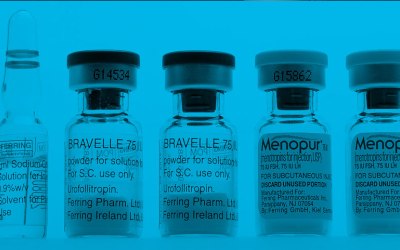
screen-shot-2016-11-11-at-4-45-31-pmThis report provides an overview of recent scientific literature on the long-term health effects of ovarian stimulation and egg retrieval, a specific component of ART used during in vitro fertilization (IVF), egg donation, and egg freezing. It is not a complete literature review but, as described, “an overall assessment of what is and what is not currently known, followed by recommendations for how to improve the information available about this aspect of reproductive health care.”

This paper builds on work the Reproductive Health Technologies Project began in 2003, when the organization convened leaders from reproductive health, rights, and justice organizations and women’s health advocacy organizations to consider issues related to ARTs and emerging technologies.

Shortly after that convening, RHTP produced a white paper about ovarian stimulation and egg retrieval. This report provides an update to reflect the additional knowledge gained from the research that has taken place since RHTP’s earlier exploration of the field.

Read the full report >

Article: A Call for Protecting the Health of Women Who Donate Their Eggs

A Call for Protecting the Health of Women Who Donate Their Eggs
By Judy Norsigian and Timothy R.B. Johnson, M.D | WBUR Boston | March 28, 2016

CommonHealthThis opinion piece, published on WBUR’s CommonHealth Blog, outlines the authors’ key concerns related to egg retrieval, both for infertility treatment and research.

It includes a call for action – to gather better data on the risks – and provides additional resources for readers interested in learning about the issues and joining the efforts of organizations working on behalf of egg providers. This includes the Dartmouth, N.H.-based Infertility Family Research Registry, which is a voluntary registry set up to understand the health and well being of individuals and families created by ARTs and We Are Egg Donors, which provides a space for egg providers to talk about – and build community around – their experiences with egg retrieval.

Read the full commentary >

Timothy R.B. Johnson, M.D., is chair of obstetrics and gynecology at the University of Michigan, Ann Arbor. Judy Norsigian is co-founder and past executive director of Our Bodies Ourselves.

Article: The Politics of Women’s Eggs

The Politics of Women’s Eggs
By Diane Tober | Undark | June 10, 2016

A curious battle is being waged over women’s bodies in the state of California. It’s not, as one might expect, the ongoing fight over women’s rights to abortion, which I fully support. Rather, the dispute involves a woman’s right to donate her eggs for use in scientific research — and to be compensated for it.

In this essay, Diane Tober, a medical anthropologist, documentary filmmaker, and assistant professor at the University of California’s Institute for Health and Aging, discusses the implications of egg retrieval (for infertility treatment and research) on the health of egg providers, and plots a timeline for pending legislation in California.

She concludes with recommendations to reduce health risks and track long-term safety data. Read the full essay > 

Plus: Learn more about Tober’s documentary “The Perfect Donor.” This film is the culmination of Tober’s conversations with women on, among other things, their health after egg retrieval and their experiences with medical providers during the process. From the film’s website:

The Perfect Donor intends to provide information to all the players in the world of egg donation–the donors, physicians, agents, intended parents, and others–so that those women who do decide to provide eggs to help another person create a family receive the best of care and have their voices heard. By hearing other women’s stories, both good and bad, this film will provide more information to women considering egg donation before deciding to proceed. It will also help fertility practitioners take steps to increase safety and informed consent for egg providers, and educate intended parents on what to look out for when pursuing egg donation to complete their families.

Book: Politics of the Womb: The Perils of IVF, Surrogacy and Modified Babies

Politics of the Womb: The Perils of IVF, Surrogacy and Modified Babies
By Pinki Virani | Penguin | 2016
Buy at Amazon >


screen-shot-2016-10-25-at-11-53-42-amFrom the book description:

How safe is aggressive Ivf, invasive Icsi, exploitative ovarian hyper-stimulation and commercial surrogacy? Politics of the Womb proves that there can be broken babies and breaking mothers; it rips away the romanticism around uterus transplants, warns of genetic theft and designer babies , and points to the human element being sacrificed, as artificial reproduction uses, reuses and recycles the woman. Pinki Virani combines investigation with analysis to question those who lead the worldwide onslaught on the woman s womb in the name of babies, and squarely confronts what has become the business of baby-making by a chain of suppliers that manufactures on demand.

Read reviews of the book by Abantika Ghosh at The Indian Express,

From the review:

The book is infused with dollops of feminism, some rudimentary anatomy, physiology and a lot of search results for IVF research posing as factual analysis of the baby-making industry, when the conclusions the book arrives at appear to have been decided way before the first line was typed.

Article: Should Young Women Sell Their Eggs?

Should Young Women Sell Their Eggs?
By Donna De La Cruz | The New York Times | Oct. 20, 2016

screen-shot-2016-10-26-at-10-04-30-amPart of a series to help readers “navigate life’s opportunities and challenges,” this article starts with a reference to Justin Griffin and her experience as an egg provider. It provides information on the health risks and links to a number of other useful resources – including the New York State Department of Health website, which covers the egg retrieval process and outcomes in detail, and community based group We Are Egg Donors, which provides spaces for egg providers to connect and act around their experiences.

Read the full article >

An additional resource is the Dartmouth, N.H.-based Infertility Family Research Registry. This is a voluntary registry set up to understand the health and well being of individuals and families created by ARTs – and all egg providers are invited to participate.

Study: Risk Disclosure and the Recruitment of Oocyte Donors: Are Advertisers Telling the Full Story?

Journal of Law, Medicine & Ethics

Risk Disclosure and the Recruitment of Oocyte Donors: Are Advertisers Telling the Full Story?
By Hillary B. Alberta, Roberta M. Berry, and Aaron D. Levine | Journal of Law, Medicine & Ethics (Neurosciences Summer 2014, pp. 232 – 243)

From the study’s abstract:

This study analyzes 435 oocyte donor recruitment advertisements to assess whether entities recruiting donors of oocytes to be used for in vitro fertilization (IVF) procedures include a disclosure of risks associated with the donation process in their advertisements. Such disclosure is required by the self-regulatory guidelines of the American Society for Reproductive Medicine (ASRM) and by law in California for advertisements placed in the state. We find very low rates of risk disclosure across entity types and regulatory regimes, although risk disclosure is more common in advertisements placed by entities subject to ASRM’s self-regulatory guidelines. Advertisements placed in California are more likely to include risk disclosure, but disclosure rates are still quite low. California-based entities advertising outside the state are more likely to include risk disclosure than non-California entities, suggesting that California’s law may have a modest “halo effect.” Our results suggest that there is a significant ethical and policy problem with the status quo in light of the known and unknown risks of oocyte donation and the importance of risk disclosure to informed consent in the context of oocyte donation.

Please contact us or the journal directly for a copy of the full study.

Article: The Cost of Life

The Cost of Life
By Justine Griffin | The Sarasota Herald Tribune | 2014


In this article, organized into chapters, the author describes her own experience as an egg provider and details the stories of others – including one woman who has so little trouble that she donates five times, and another who develops severe endometriosis symptoms.

Excerpt:

One night last summer at my parent’s dinner table, I told my mom and dad that I wanted to help somebody have a baby. The usual lively suppertime conversation and laughter died down, and my parents lost their appetites. They didn’t want to joke about that time I drove my brother’s four-wheeler into a tree anymore.

I told them I am like the thousands of other women — the daughters, sisters, girlfriends or wives at someone else’s dinner table — who donate their eggs to couples who cannot conceive a child on their own.

Read the full article >

Study: Gestational Surrogacy

Gestational Surrogacy
By Peter R. Brinsden | Human Reproduction Update (Vol. 9, No.5, 2003, pp. 483 – 491)

From the study’s abstract:

Gestational surrogacy is a treatment option available to women with certain clearly defined medical problems, usually an absent uterus, to help them have their own genetic children. IVF allows the creation of embryos from the gametes of the commissioning couple and subsequent transfer of these embryos to the uterus of a surrogate host. The indications for treatment include absent uterus, recurrent miscarriage, repeated failure of IVF and certain medical conditions. Treatment by gestational surrogacy is straightforward and follows routine IVF procedures for the commissioning mother, with the transfer of fresh or frozen–thawed embryos to the surrogate host. The results of treatment are good, as would be expected from the transfer of embryos derived from young women and transferred to fit, fertile women who are also young. Clinical pregnancy rates achieved in large series are up to 40% per transfer and series have reported 60% of hosts achieving live births. The majority of ethical or legal problems that have arisen out of surrogacy have been from natural or partial surrogacy arrangements. The experience of gestational surrogacy has been largely complication‐free and early results of the follow‐up of children, commissioning couples and surrogates are reassuring. In conclusion, gestational surrogacy arrangements are carried out in a few European countries and in the USA. The results of treatment are satisfactory and the incidence of major ethical or legal complications has been limited. IVF surrogacy is therefore a successful treatment for a small group of women who would otherwise not be able to have their own genetic children.

Read the full study >

Study: The Incidence of Both Serious and Minor Complications in Young Women Undergoing Oocyte Donation

Fertility and Sterility Journal

The Incidence of Both Serious and Minor Complications in Young Women Undergoing Oocyte Donation
By Kara N. Maxwell, M.D., Ph.D., Ina N. Cholst, M.D., and Zev Rosenwaks, M.D. | Fertility and Sterility (Vol. 90, No. 6, December 2008, pp. 2165 – 2171)

From the study’s abstract:

This study provides information on the incidence of serious complications experienced by oocyte donors after controlled ovarian hyperstimulation and oocyte retrieval. It provides evidence that with careful monitoring, and when a liberal cancellation policy is followed, oocyte donors experience lower rates of ovarian hyperstimulation syndrome, compared with infertile women undergoing IVF. Furthermore, the study provides the first set of data on the rate of symptomatic minor complications experienced by oocyte donors. This information will help clinicians administer appropriate informed consent to the young women who present themselves as potential oocyte donors.

Read the full study >

Book: Cracked Open: Liberty, Fertility and the Pursuit of High-Tech Babies

Cracked Open: Liberty, Fertility and the Pursuit of High-Tech Babies
By Miriam Zoll | Interlink Publishing Group | 2013
Buy at Amazon >

Foreword by Judy Norsigian, co-founder and former executive director, Our Bodies Ourselves, and Michele Goodwin, director of the Center for Biotechnology and Global Health Policy

Cracked Open by Miriam ZollFrom the book description:

Cracked Open is Miriam Zoll’s eye-opening account of growing into womanhood with the simultaneous opportunities offered by the women’s movement and new discoveries in reproductive technologies. Influenced by pervasive media and cultural messages suggesting that science had finally eclipsed Mother Nature, Zoll –– like millions of women –– delays motherhood until the age of 40.

When things don’t progress as she had hoped, she and her husband enter a science-fiction world of medical seduction, capitalist conception and bioethical quagmires. Desperate to conceive, they turn to unproven treatments and procedures only to learn that the odds of becoming parents through reproductive medicine are far less than they and their generation had been led to believe.

Visit Miriam Zoll’s website to learn more >

Watch Miriam Zoll talk about her experience with infertility, IVF, and the search for an egg provider in an excerpt from The Cycle Forum.